Roughly 1 in 20 hospital patients experience preventable harm, with patient misidentification remaining a persistent root cause across both inpatient and outpatient care [1, 2]. While physical wristbands and medical cards are identification gold standard, their operational vulnerabilities - soiled barcodes, cut bands, or passive identification checks - are well documented in daily clinical practice [2].
To evaluate whether AI-supported biometric fingerprinting can close these safety gaps without slowing down clinicians, we conducted a multimethods study at a specialized testing ground: the Hospital da Luz Learning Health Simulation Center in Lisbon [3].
Published in JMIR Biomedical Engineering, this pilot - developed through a collaboration between Loyola University Chicago, Heuristik Technologies, and Luz Saúde - offers concrete data on how biometric verification performs in realistic clinical workflows [3].
Study design: Stress-testing safety without patient risk
Deploying unvalidated biometrics directly into active wards introduces unacceptable operational risk. High-fidelity clinical simulation provides an ideal bridge: it lets researchers stress-test software usability, edge cases, and workflow integration before introducing technology to live patient care.
Conducted in March 2025, the trial evaluated a total cohort of 18 unique participants (mean age 36) across a simulated hospital workflow:
- 9 Healthcare Testers: 5 registered nurses, 2 patient-care technicians, and 2 client-service technicians evaluated the system in active scenarios.[3].
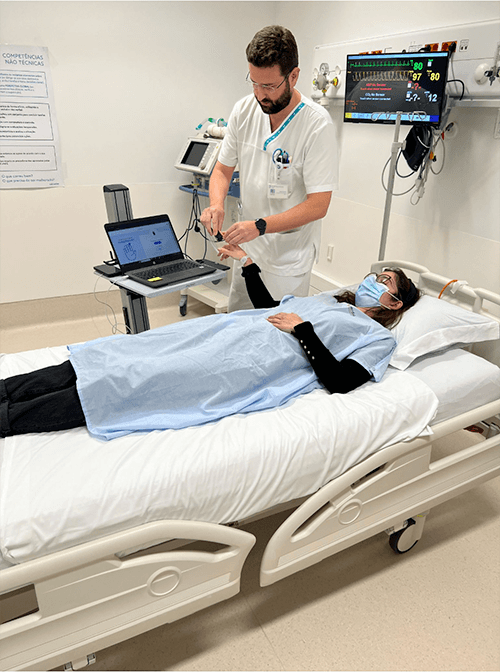
- 12 Simulated Patients: Tested across three distinct clinical settings (Outpatient, Preoperative, and Postoperative) using four deployed Heuristik scanning devices. This group comprised 9 non-clinical participants plus 3 nurses who assumed a dual role as both system testers and simulated patients [3].
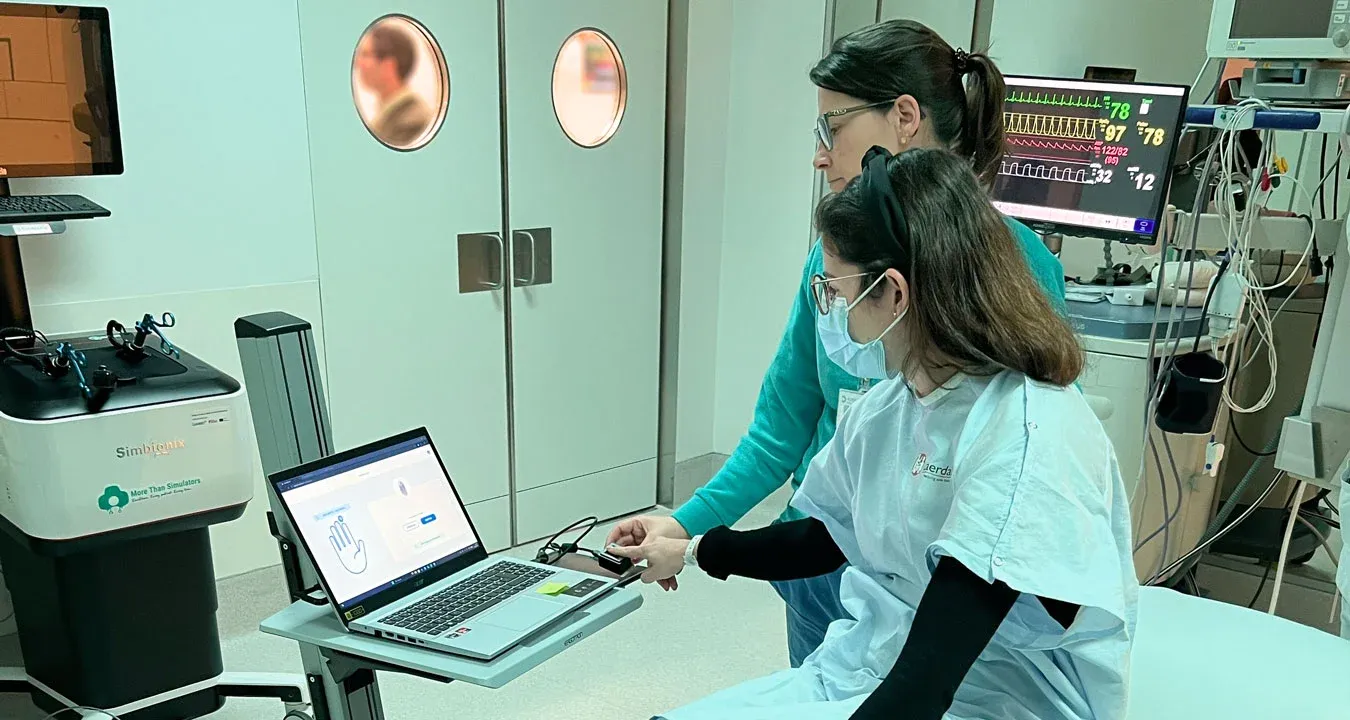
To uphold strict privacy standards, the Heuristik platform operated standalone without live Electronic Health Record (EHR) integration. Fingerprint data was encrypted, pseudonymized, and processed on a secure cloud server, creating a secure bridge without exposing direct medical records.
What the data showed
The evaluation measured two primary outcomes: technical feasibility (matching accuracy) and staff acceptability (usability and satisfaction) [3].
- 100% Matching Accuracy: Across all point-of-care scans in outpatient, preoperative, and postoperative settings, the system achieved a 100% identification match rate using at least one enrolled fingerprint [3].
- 87.14 System Usability Scale (SUS) Score: Healthcare staff completed the standardized 10-item SUS survey, scoring the system at a mean of 87.14 out of 100 (ranging from 70 to 97.5). In usability research, scores above 68 represent above-average acceptability, placing the tool in a highly favorable usability bracket [4, 5]
- 100% User Agreement: All participating staff strongly agreed or agreed that the system was useful, reliable, and effective at reducing identification errors. Open-ended feedback highlighted system reliability, practical ease of use, and quick verification speed [3].
Takeaways: preparing for live wards
While these preliminary results demonstrate strong technical feasibility and high staff acceptance, they must be interpreted within the natural scope of an initial pilot. The study was specifically structured to establish baseline feasibility and user satisfaction rather than measure long-term, system-wide clinical error reduction [3]. Furthermore, although high-fidelity simulation effectively mimics core ward dynamics, it cannot fully replicate the chaotic pressures, severe low-light shifts, or frantic interruptions of an active emergency department. As the technology advances toward broader deployment, our upcoming trials will focus on capturing more granular biometric metrics - specifically evaluating False Rejection Rates (FRR) when handling degraded, wet, or dirty fingerprints directly at the bedside.
The simulation pilot at Hospital da Luz confirmed that AI-assisted biometric verification can achieve high precision and fast adoption among nursing and administrative staff. Establishing this operational baseline provides the necessary foundation for the next phase: validated in vivo clinical trials in live hospital environments.
Publishing these results in JMIR Biomedical Engineering validates the technical feasibility and operational readiness of our system [3]. High-fidelity simulation proves that automated patient verification can be fast, accurate, and low-friction under realistic clinical constraints. Establishing this baseline at Hospital da Luz represents a necessary foundation—paving the way for safe, validated, and effective deployment in real-world healthcare settings.
References
[1] Panagioti, M., Khan, K., Keers, R. N., Abuzour, A., Phipps, D., Kontopantelis, E., Bower, P., Avery, A. J., & Avery, A. (2019). Prevalence, severity, and nature of preventable patient harm across medical care settings: Systematic review and meta-analysis. BMJ, 366, l4185. https://doi.org/10.1136/bmj.l4185
[2] Riplinger, L., Piera-Jiménez, J., & Dooling, J. P. (2020). Patient identification techniques - Approaches, implications, and findings. Yearbook of Medical Informatics, 29(1), 81–86. https://doi.org/10.1055/s-0040-1701984
[3] Schroers, G., del Rio Oliva, M., O'Rourke, J., Caballero, A., Barata Gomes, L., & Araújo, R. (2026). Fingerprint-based patient identification technology: Simulated pilot study on technical performance and usability. JMIR Biomedical Engineering, 11, e88657. https://doi.org/10.2196/88657
[4] Brooke, J. (1996). SUS-A quick and dirty usability scale. In P. W. Jordan, B. Thomas, B. A. Weerdmeester, & I. L. McClelland (Eds.), Usability Evaluation in Industry (pp. 189–194). Taylor & Francis.
[5] Lewis, J. R. (2018). The System Usability Scale: Past, present, and future. International Journal of Human–Computer Interaction, 34(7), 577–590. https://doi.org/10.1080/10447318.2018.1455307